
Lately, more cases of measles have been popping up in the news, and if you’re like many people, that can feel a little unsettling. For a lot of us, measles sounds like something from the past, so hearing about new cases brings up questions, concerns, and maybe even a bit of fear.
If you’re feeling confused or worried, you’re not alone. The headlines can make things seem overwhelming, but the reality is often much more manageable than it sounds.
So, what is measles? Measles is a highly contagious viral infection caused by the measles virus. It spreads through the air when an infected person coughs, sneezes, or even breathes, and it can linger in the air or on surfaces for a short time.
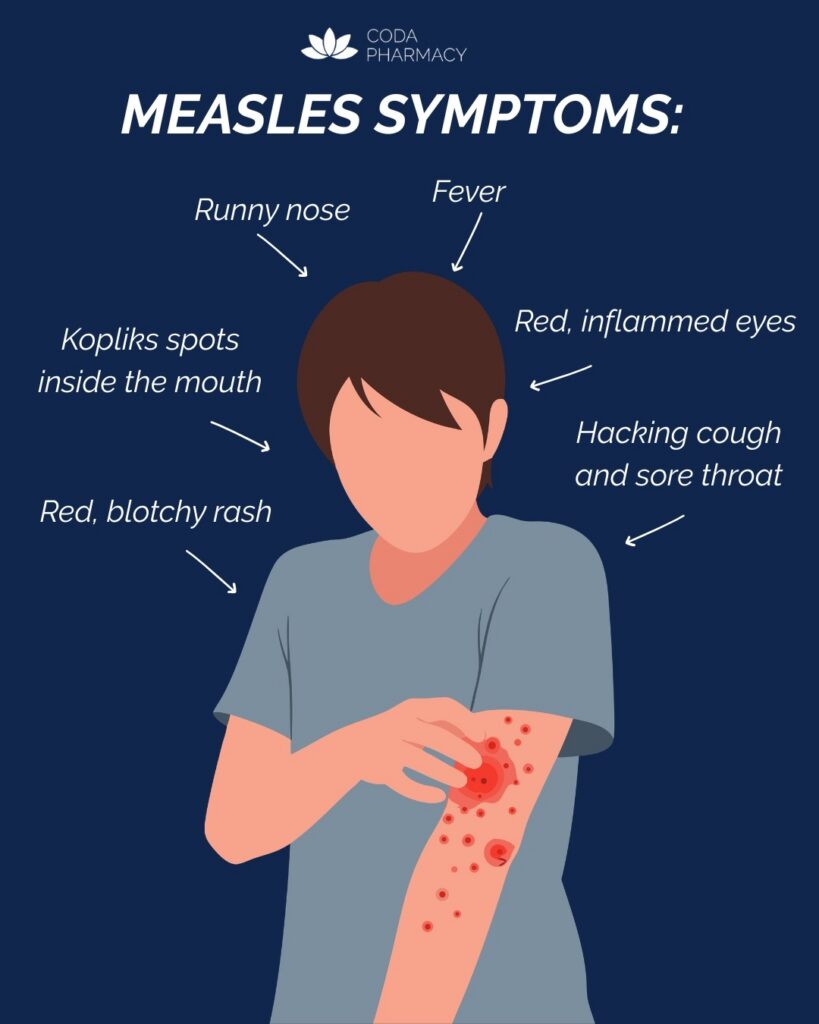
Symptoms of measles:
- High fever (often 101–104°F / 38.3–40°C)
- Cough
- Runny nose
- Red, watery eyes
- Fatigue and general feeling of being unwell
- Small white spots inside the mouth
- A red, blotchy rash that usually starts on the face and spreads downward to the rest of the body
Symptoms typically appear 7–14 days after exposure. The rash usually develops a few days after the fever begins and can last about a week.
MMR vaccine:
If you’ve had the MMR vaccine, you are very well protected against measles. Two doses of the vaccine are about 97% effective at preventing infection, and even in the rare case that a vaccinated person does get measles, the illness is usually much milder and less likely to cause complications.
For most people who received their vaccines as children, that protection is long-lasting. There’s typically no need for a booster if you’ve completed the recommended series.
If you’re unsure whether you’ve had one or two doses, or you can’t find your records, it’s a good idea to check with your doctor. They can review your vaccination history, recommend testing if needed, and let you know whether you’re fully protected.
What to do if you start to get symptoms of measles:
Stay at home, measles is extremely contagious. Avoid work, school, social gatherings, and public places to help prevent spreading it to others.
Don’t just walk into your doctor’s surgery or hospital. Call ahead and let them know your symptoms. This allows them to take precautions to protect other patients.
Limit contact with others and stay in a separate room if possible, avoid close contact with household members, and don’t share drinks, utensils, or towels.
Watch for high fever, difficulty breathing, severe headache, persistent vomiting, or signs of dehydration. Seek urgent care if symptoms become severe.
There’s no specific antiviral treatment for measles in most cases, so care is supportive, fluids, rest, and fever management as advised by your healthcare provider.
How to reduce your risk of catching measles:
Make sure you’re vaccinated. Check your records to confirm you’ve received two doses. If you’re unsure, your doctor can review your history or recommend vaccination.
Avoid exposure during outbreaks. If there are reported cases in your area, limit time in crowded indoor spaces, especially if you’re unvaccinated.
Practice good hygiene. Wash hands regularly, avoid touching your face, and cover coughs and sneezes. While measles spreads through the air, these habits still reduce overall infection risk.
Protect vulnerable individuals. Infants too young to be vaccinated, pregnant individuals, and those with weakened immune systems rely on community immunity, meaning high vaccination rates help protect them.
Frequently asked questions:
How do I know if I’m fully protected against measles?
Most people are fully protected if they’ve received two doses of the MMR vaccine. If you’re unsure about your vaccination status, your doctor can review your records or recommend next steps.
Can vaccinated people still get measles?
It’s rare, but possible. However, people who are fully vaccinated are much less likely to get sick, and if they do, symptoms are typically milder and complications are less common.
What should I do if there’s a measles case in my community?
First, don’t panic. Check that you and your family are up to date on vaccinations. If you’re fully vaccinated, your risk is very low. If you’re unsure or have specific health concerns, contact your healthcare provider for guidance.
We hope this blog has brought you a little bit of reassurance and clarity on the current measles outbreak! Remember to get vaccinated and keep vulnerable people safe.
Coda Pharmacy is here to support you every step of the way. From offering expert advice on diet and lifestyle to delivering your NHS prescriptions free of charge. If you have any questions about what you have read in this article or any of the services that Coda Pharmacy can provide you with, please do not hesitate to reach out and contact us here.
Visit our socials for more health tips and to keep up to date with us!